Why I Study the Delivery of Anti-Inflammatory Drugs to the Brain
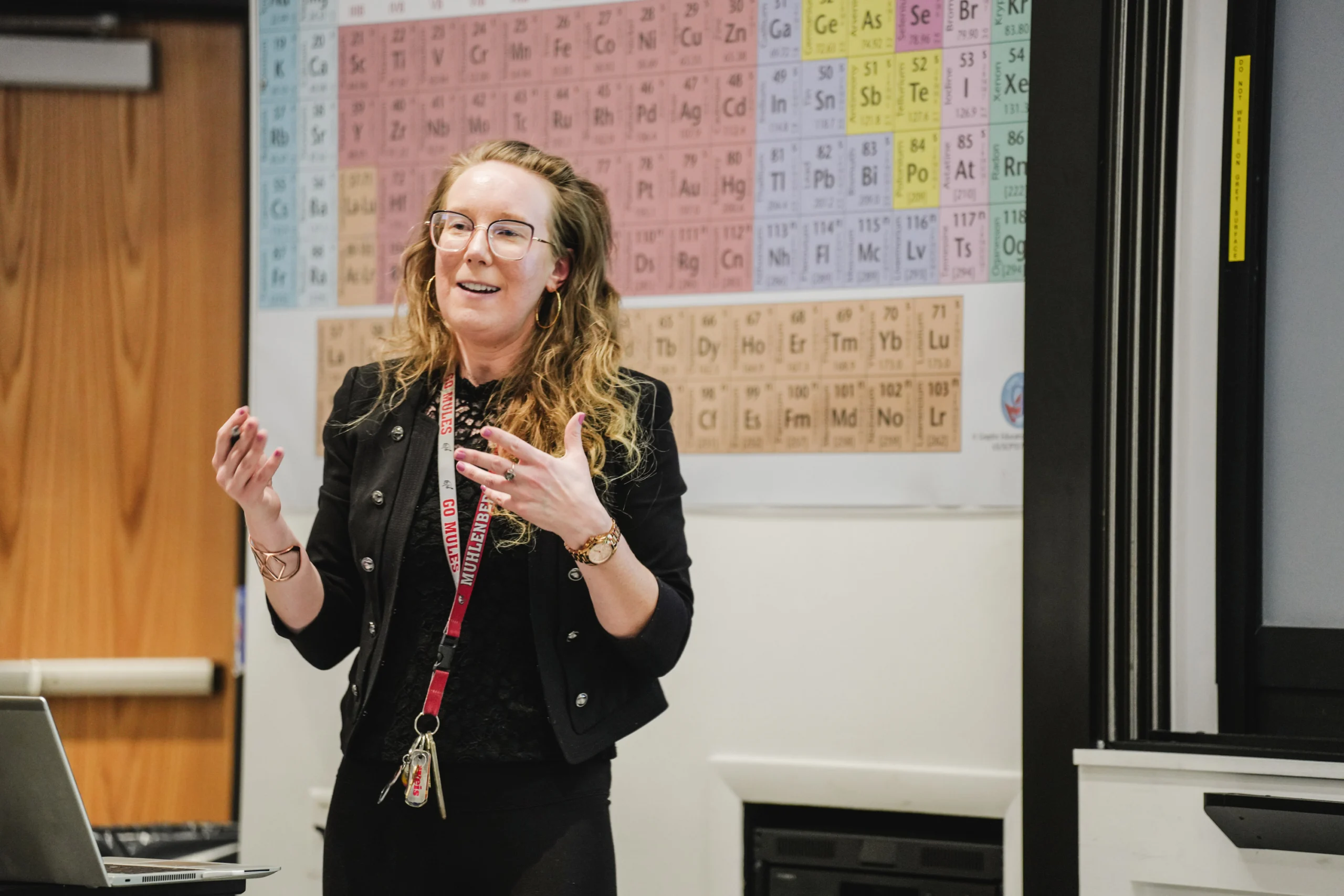
Associate Professor of Chemistry Sherri Young explains how she became interested in medicinal chemistry and details the research she does with students on campus.
I had always had an affinity toward the sciences and math when I was in grade school. I didn’t do as well in the humanities, and I didn’t enjoy them as much. I took chemistry and biology in high school, and I liked chemistry a lot more. Dissecting was not something that I enjoyed. I love baking, and I feel like chemists are good bakers and vice versa. I was also able to take a forensic chemistry class, which was a lot of fun. That was around the time when all the “CSI” shows were getting really popular, so I thought, “Maybe I’ll go into forensic chemistry.” Not many schools had undergraduate forensic chemistry programs at that time, so I chose to study chemistry at Albright College., a small liberal arts college in Reading, Pennsylvania.
Because I did not enjoy general chemistry, I thought about switching my major, but one of my coworkers at the restaurant where I worked convinced me to stick with it. I’m glad I did, because I took organic chemistry and had a really great experience. I had a phenomenal professor, and we still keep in touch and collaborate. I thought to myself, “This is what I want to do. I want to teach organic chemistry.”
“I took organic chemistry and had a really great experience. I had a phenomenal professor, and we still keep in touch and collaborate. I thought to myself, ‘This is what I want to do. I want to teach organic chemistry.’”
As I pursued my Ph.D. in chemistry at Lehigh University, I became fascinated by medicinal chemistry. It’s the best of both worlds. You get to make molecules, but they also have a purpose.
My dissertation was on non-steroidal anti-inflammatory drug (NSAID) derivatives that are also inhibitors of acetylcholinesterase, an enzyme that plays a role in Alzheimer’s disease and also in inflammation. I was synthesizing dual-functioning molecules that would target both inflammation and acetylcholinesterase. They performed very well in an animal model performed by our collaborators at Rutgers University. Some of these molecules have progressed to at least preclinical trials, if not clinical trials, so it was an exciting project.
After graduating with my Ph.D., I went straight to Muhlenberg to serve as a visiting assistant professor. I had only served as a teaching assistant up until that point, and it was going to be the first year I taught a full-blown class with labs and everything. All the faculty members here were so helpful and open, sharing resources and tips. The students were also a great support system for me at that time.
I’m still studying NSAIDs, specifically for the application of Alzheimer’s disease. We’re looking at more effectively delivering NSAIDs to the brain. Molecules have certain properties in common if they’re permeable to the blood-brain barrier, so we make molecules that have those properties. There is also what’s called plasma protein binding: If a molecule such as an NSAID is extensively bound to plasma proteins, that will prevent it from entering the brain, because the blood-brain barrier restricts passage of large molecules. There’s also efflux: Even if a molecule were to get into the brain, some transporter proteins could transport it out — that happens with some NSAIDs as well.
It’s a complicated issue, and we try to address it in multiple ways. We try to increase blood-brain barrier permeability, decrease plasma protein binding, and hopefully decrease efflux. Since one minor structural change can impact a variety of other molecular properties, drug design is very much a balancing act and an art. We make molecules that are NSAID derivatives; we link them to what we call a shuttle. That linkage has to be stable, but not too stable, because we do eventually want the NSAID to be released once the molecule is in the brain. We assess the stabilities of these molecules in the lab using human plasma. It’s very early-stage drug discovery.
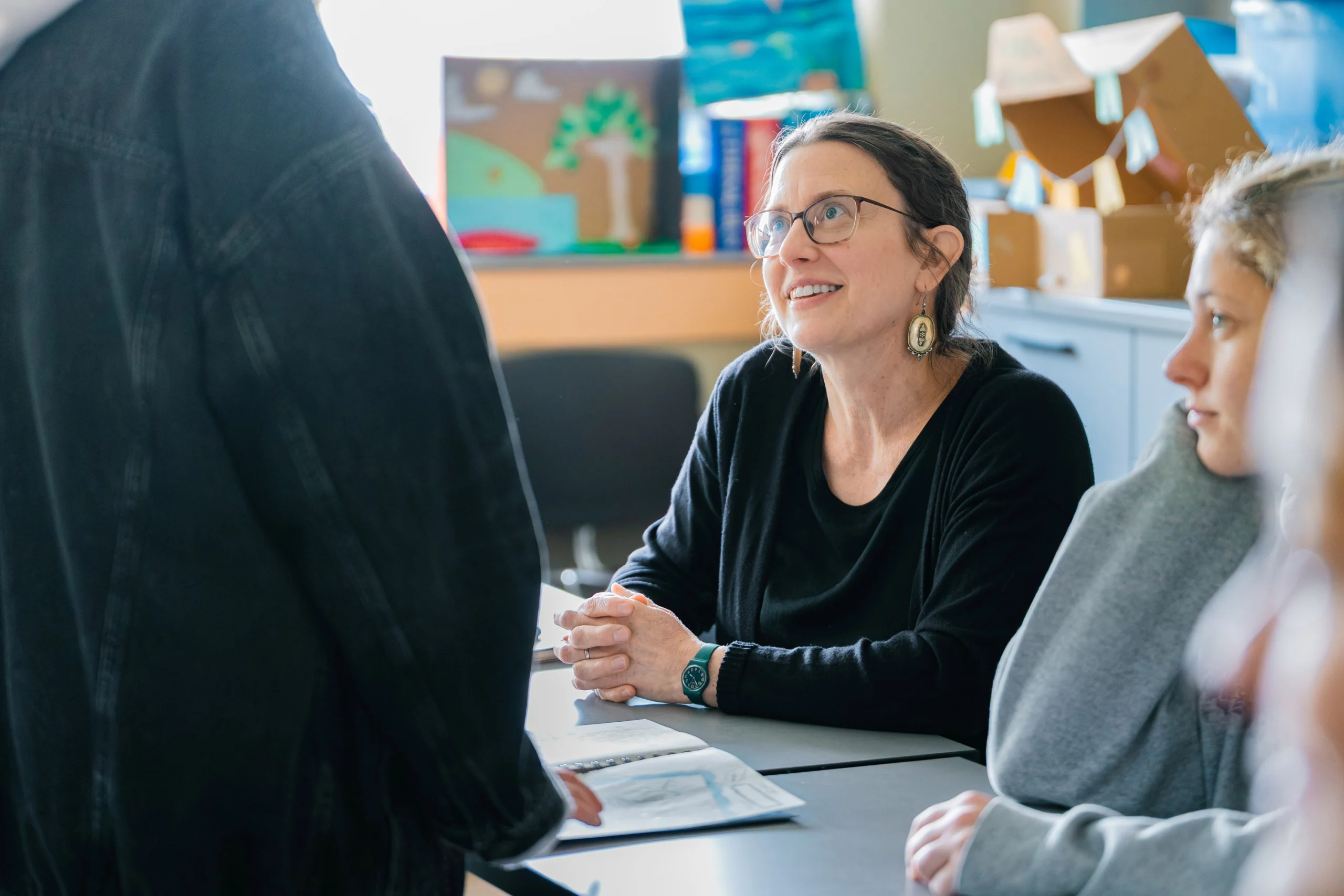
I love seeing the students get things done in the lab. It’s rewarding to work with the students and see them move the research forward.
“I love seeing the students get things done in the lab. It’s rewarding to work with the students and see them move the research forward.”
Strange, an accounting and business administration major at Muhlenberg, is CEO of Bassetts Ice Cream, the business that was started by his great-great-grandfather.