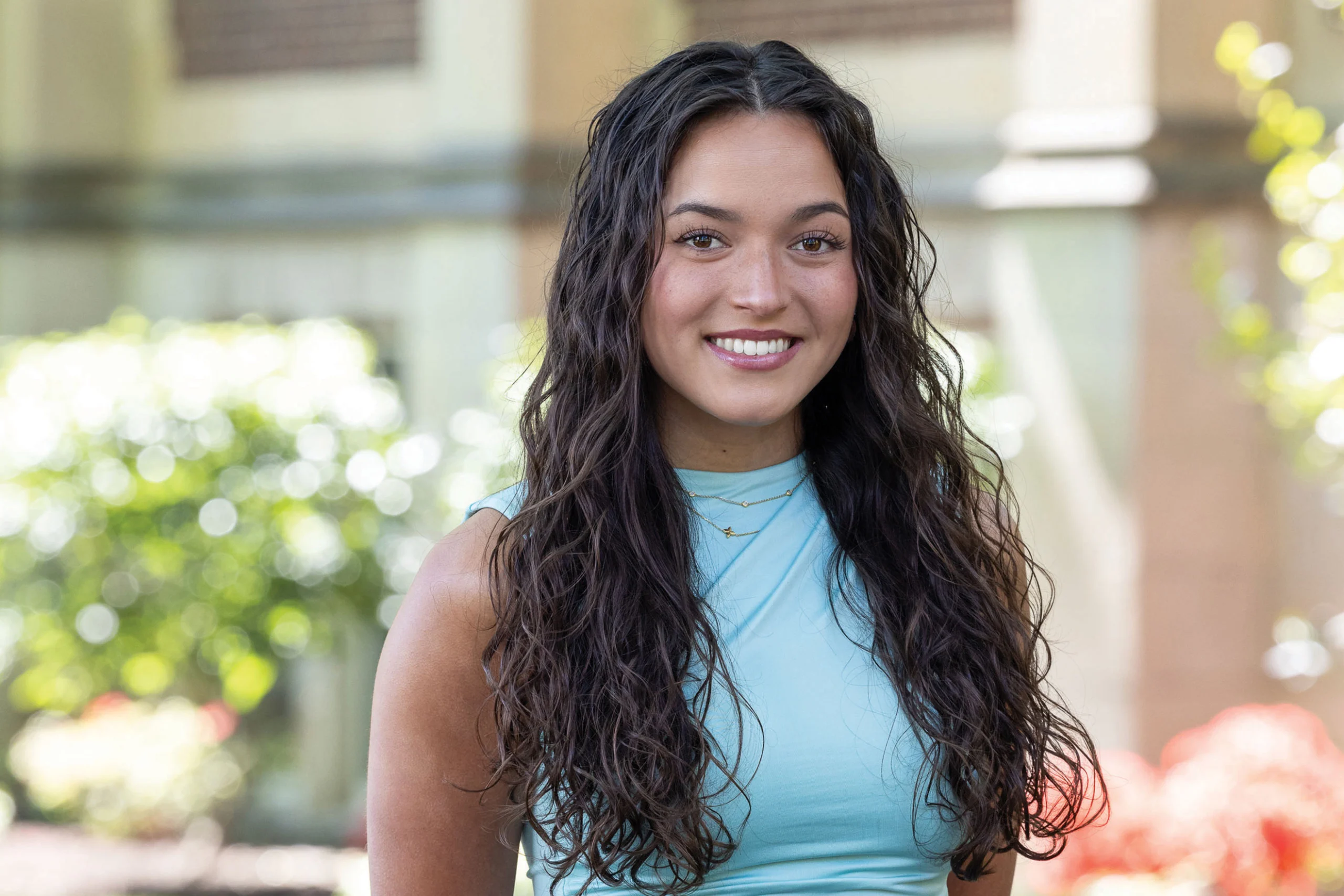
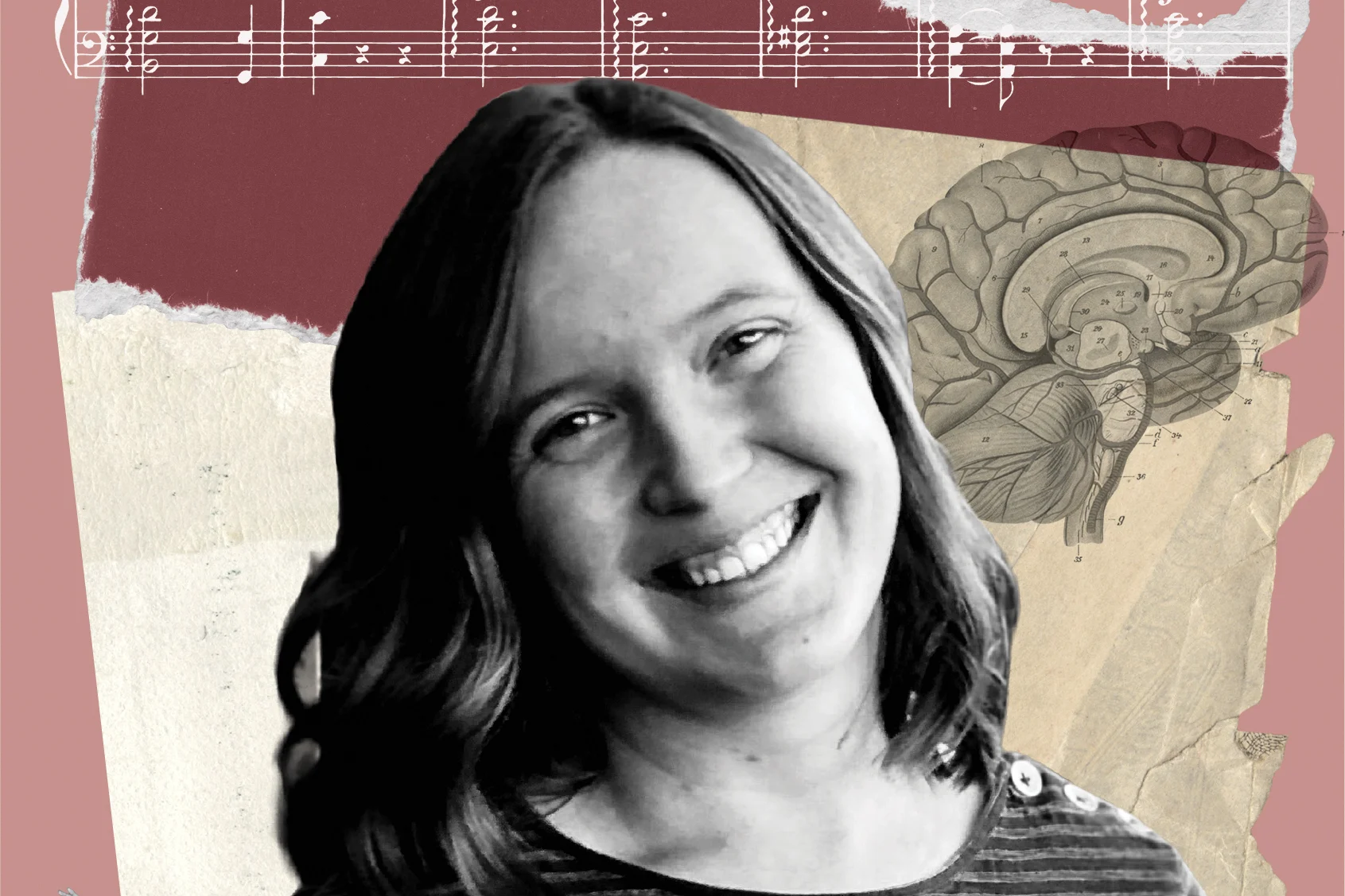
After Muhlenberg, Ellen Herschel, Ph.D. ’15 spent a few years as a working actor and theatre educator. She enjoyed it but she really missed science, so she spent a few years working for a lab in Chicago that was studying Parkinson’s disease. She enjoyed it, but she really missed the arts.
“At that point, I had explored being an artist and being a researcher, but I hadn’t put them together yet,” says Herschel, who was a theatre and neuroscience double major at Muhlenberg. “I was like, ‘There has to be people doing these two things together at the same time.’”
She applied for 10 doctoral programs that combined her two passions and landed at the University of Southern California Brain and Creativity Institute, where she just completed a doctorate in brain and cognitive science. In May, she successfully defended her dissertation, which draws upon work she’s done in USC’s Brain and Music Lab. She has worked on brain imaging projects with subjects of all ages, from elementary schoolers (studying the impact of arts education) to older adults (studying how music training might be a protective mechanism against cognitive decline).
“I ultimately decided to have my dissertation focus on the ways in which musical and artistic experience impacts our well-being across the lifespan,” she says. “How does this ubiquitous thing that’s around us all the time, music, impact our health and social connection with others?”
“So much of performance is about how you embody a character … I really wanted to understand, from a scientific point of view, how do we do that?”
—Ellen Herschel, Ph.D. ’15
Herschel began laying the foundation for her interdisciplinary doctoral studies early on. She attended Michigan’s Interlochen Arts Academy — a top boarding school for artists of all kinds — where she also had terrific science teachers and experiences. She chose Muhlenberg over Bachelor of Fine Arts programs because she knew that she “loved both artistic work and scientific work — they filled my cup in different ways,” she says.
She knew she’d be a theatre major at Muhlenberg but found neuroscience through exploratory coursework across the sciences. Taking an introductory class with Stanley Road Professor of Neuroscience Jeremy Teissere hooked her on the discipline.
“So much of performance is about how you embody a character,” she says. “A lot of that has to do with tapping into your own personal experience — what do our bodies do when we get upset, angry, happy, sad — and how do you bring that emotion to bear by incorporating it into the way you move physically through the world? … I really wanted to understand, from a scientific point of view, how do we do that? How do we come to experience an emotional response? What’s actually happening in our brains and bodies to make that happen?”
At Muhlenberg, Herschel explored this in various ways, including through her senior thesis research. The project explored the impact of arts and dance therapies on patients with Parkinson’s disease. She found role models for cross-disciplinary curiosity in her fellow students and her professors (Teissere, for example, majored in English as an undergraduate and has a background in dance).
“Seeing that complexity of existence in the professors makes a big difference in realizing that you can hold the multitudes of yourself that way, too,” says Herschel, who accepted a postdoctoral faculty fellow position at USC to teach interdisciplinary courses and will be continuing her research in the Brain and Music Lab. “And having the option to really dig into both [disciplines] during my undergrad experience gave me the opportunity to actually see how they were connected.”
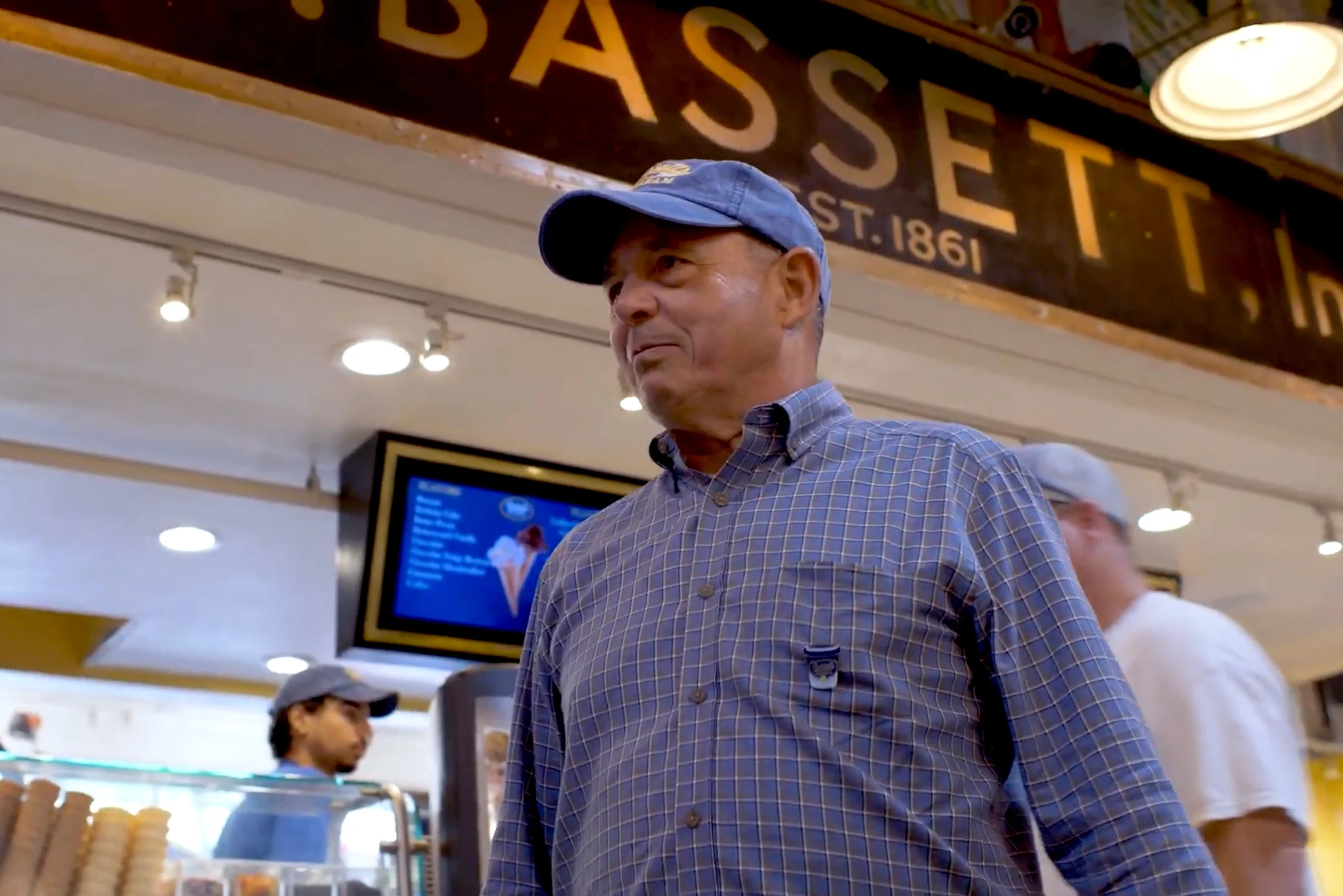
Strange, an accounting and business administration major at Muhlenberg, is CEO of Bassetts Ice Cream, the business that was started by his great-great-grandfather.