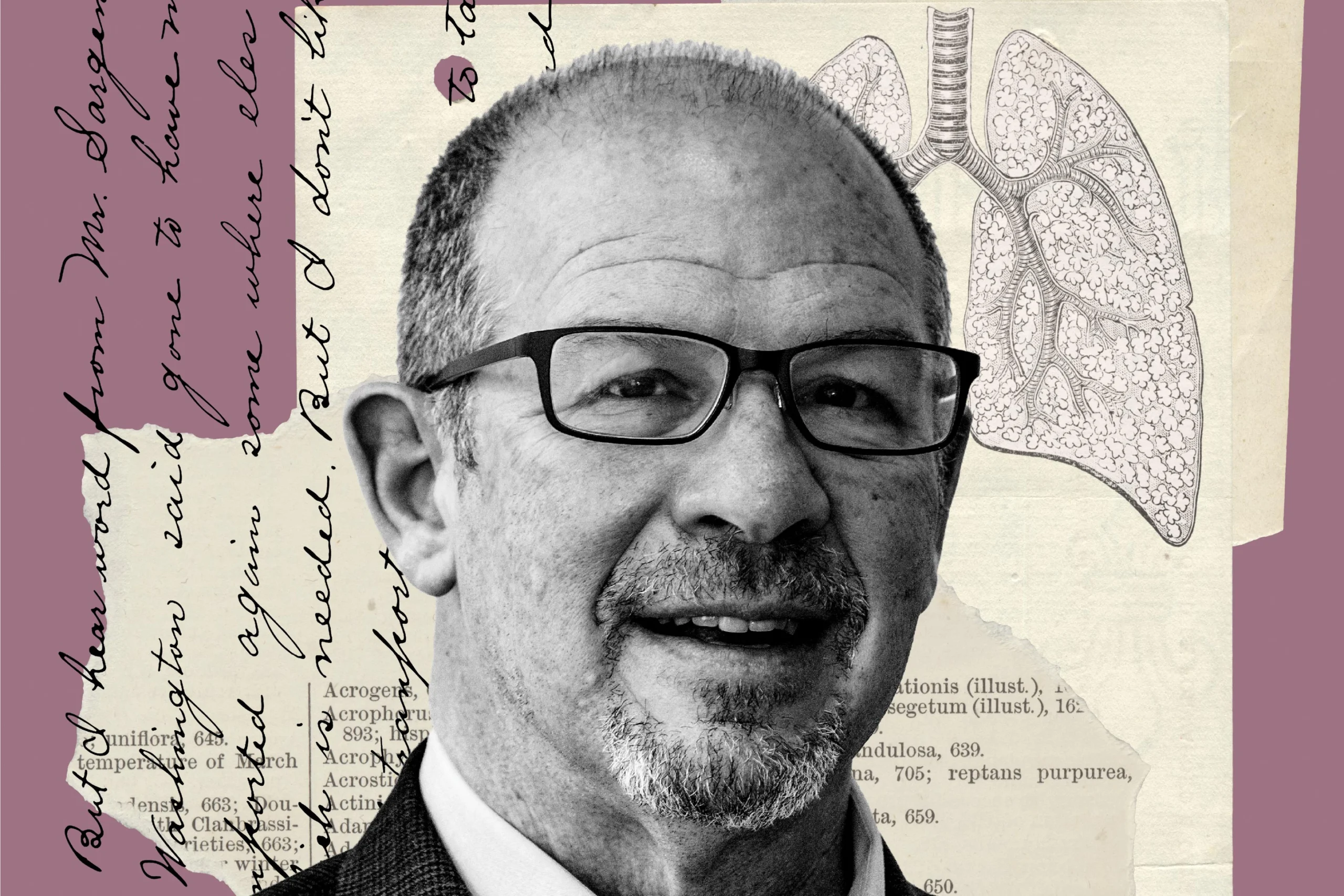
enjamin S. Wilfond, M.D. ’81 gets choked up when he talks about Chris. Chris was a teenager with cystic fibrosis, a genetic condition that causes thick mucus to build up in the lungs, digestive system, and elsewhere in the body. Wilfond met Chris at a camp for children with cystic fibrosis, between the first and second years of his pediatric pulmonary fellowship at the University of Wisconsin. It was his first time interacting with cystic fibrosis patients outside a hospital setting. At the time, treatment options for cystic fibrosis were fairly limited, and patients typically died in their 20s. Chris’s case was particularly advanced.
“What I remember was talking to this 14-year-old boy who’s literally at the end of his life, and he was just the nicest kid,” says Wilfond, a professor of pediatrics at the University of Washington. “It completely changed how I viewed my role as a doctor and how I viewed patients. What families go through with any illness is just incredible. I have a lot of appreciation and admiration for what they do. They’ve got a really hard road in life, and my motivating question is, is there anything I can do to make their life better?”
Wilfond retired from seeing patients in 2023, but his primary focus was supporting children with chronic lung disease of prematurity (and their families). Today, his focus is on research, and he’s most passionate about a project called the Trisomy Collaborative. It provides grants to study Trisomy 13 and 18, genetic conditions that are usually described as fatal, and the educational materials available to clinicians and families about these conditions. In reality, with interventions, 10 to 20% of patients live more than a year, and some reach the teenage years or adulthood.
“Our mission is really to try to improve the way the health care delivery system interacts with these families, making sure doctors and families have adequate, balanced information,” Wilfond says.
“I thought, ‘Well, I can get three credits for thinking about the meaning of life, and if I do this every semester, I’ll be a major.’ I like this class. I like this teacher. I’ll just keep taking more classes.”
—Benjamin S. Wilfond, M.D. ’81
Wilfond’s career-long interest in complex medical questions was forged at Muhlenberg, where he was a biology and philosophy double major. He came in knowing he wanted to be pre-med; the second major came from an introductory course with Emeritus Professor of Philosophy Ludwig Schlecht.
“I thought, ‘Well, I can get three credits for thinking about the meaning of life, and if I do this every semester, I’ll be a major,’” recalls Wilfond, who was also heavily involved in theatre as a student. “I like this class. I like this teacher. I’ll just keep taking more classes.”
Wilfond didn’t see the connection between the two disciplines until he shadowed a medical resident as a junior, when he saw in action that the practice of medicine was as much about the social interaction between doctor and patient as it was about the science. This morphed into an interest in bioethics, which the college helped foster through an independent study opportunity and funding for a subsequent trip to an undergraduate bioethics conference.
“What was so cool about Muhlenberg was not just the double major but the support and caring of faculty in letting students explore what they’re interested in,” says Wilfond, who spoke and received an honorary degree at Muhlenberg’s 2022 commencement. “It really, truly got me going and gave me an incredible, meaningful start.”
Strange, an accounting and business administration major at Muhlenberg, is CEO of Bassetts Ice Cream, the business that was started by his great-great-grandfather.